Bermuda Riviera Deepwater Homes: The Buyer Checklist
April 16, 2026
April 16, 2026
Buying a deepwater home in Bermuda Riviera can look simple on paper. You see a waterfront lot, a private dock, and quick access to the Intracoastal, and it feels like the boxes are checked. But in this Fort Lauderdale neighborhood, the details behind the seawall often matter more than the listing headline. If you want to buy with confidence, this checklist will help you focus on the questions that truly shape usability, future costs, and long-term value. Let’s dive in.
Bermuda Riviera is a defined Fort Lauderdale neighborhood, not just a marketing label. The City of Fort Lauderdale recognizes it as an official neighborhood association, and local civic information describes it as a roughly 250-home barrier-island community between A1A and the Intracoastal Waterway, opposite Galt Ocean Mile, with most homes on deep water and access restricted to NE 40th Street. That combination creates a small, beach-close waterfront setting where boating access plays a major role in demand and value.
For you as a buyer, that means one important thing: not all waterfront lots here function the same way. In Bermuda Riviera, the exact canal location, dock setup, route to open water, and seawall condition can matter more than the neighborhood name alone. Two homes may both be labeled deepwater, yet offer very different real-world boating experiences.
Before you fall in love with finishes or views, begin with your vessel. Your boat’s draft, beam, height, and turning needs should shape your search from the start.
A home may be beautifully updated, but if your boat does not fit comfortably at the dock or along the route to the Intracoastal, the property may not meet your goals. This is especially true for buyers with larger yachts, flybridges, towers, radar arches, or sail rigs.
When sellers describe a property as deepwater, treat that as a starting point, not a final answer. NOAA’s chart and tide guidance explains that depth soundings are based on Mean Lower Low Water, and actual water levels can be lower than expected during certain conditions.
That is why your key question should be: What is the depth at mean low water at the dock itself? You also want to know whether that depth works at the narrowest point of the approach, at the turn, and at the docking area, not just in the middle of the canal.
Depth alone is not enough. A boat also needs practical room to enter, turn, align, and dock safely.
In Bermuda Riviera, canal conditions can vary by street and lot. A property that appears ideal online may feel very different when you consider beam clearance, turning radius, neighboring dock structures, and setback limitations. For larger vessels, these details can make or break day-to-day use.
A deepwater home is only as useful as the route your boat must travel. In Fort Lauderdale, bridge clearances and route-specific constraints can affect whether a vessel is truly compatible with a property.
According to NOAA Coast Pilot data, the broader north Fort Lauderdale Intracoastal corridor includes moveable bridges with different closed clearances, including Commercial Boulevard at 15 feet, Oakland Park Boulevard at 22 feet, Sunrise Boulevard at 25 feet, and Southeast 17th Street Causeway at 55 feet. NOAA also notes lower fixed spans on side waterways, including Middle River routes with very limited clearance.
If your boat has a tower, tall arch, flybridge, or mast, route planning becomes even more important. The right question is not simply whether the property has ocean access. The real question is whether your vessel can complete the full route under normal operating conditions.
This is one reason Bermuda Riviera stands out for many boating buyers. Still, every route should be verified based on the specific dock location and boat profile. A map view is not enough when bridge exposure and turns are involved.
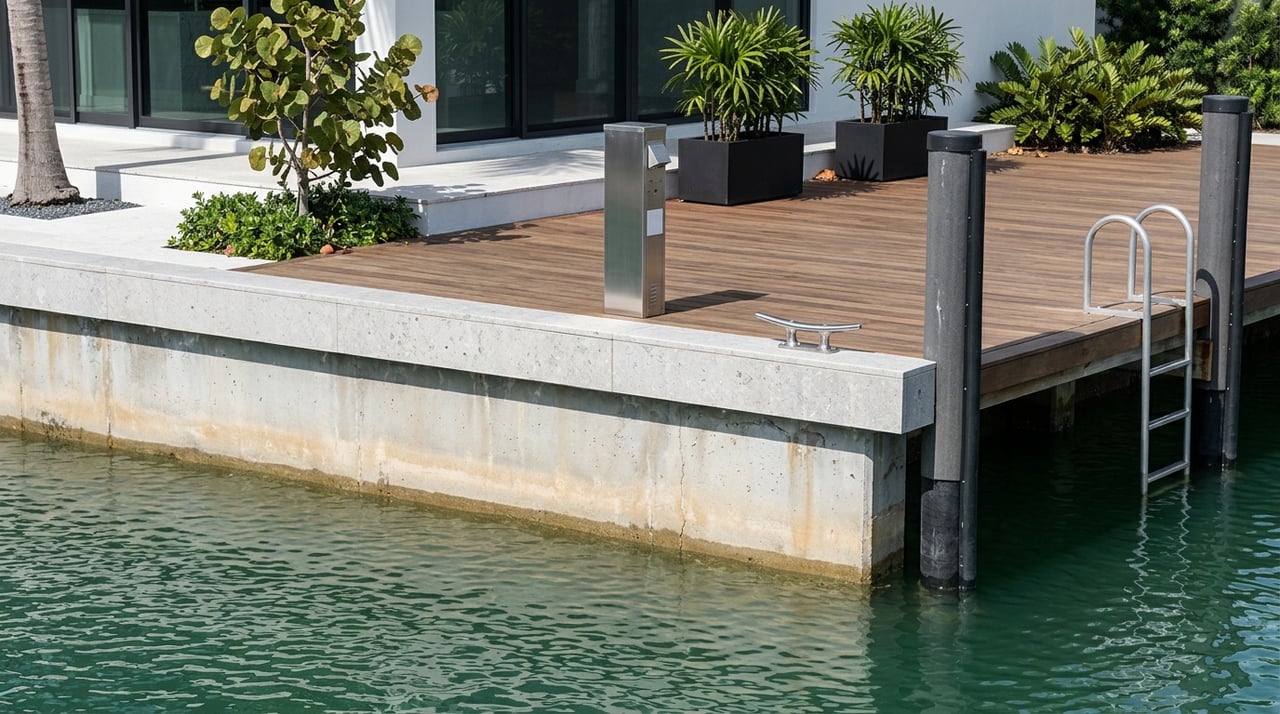
In a waterfront purchase, the seawall is not just a background feature. It is a major structural and compliance item that can directly affect future cost.
Broward County’s resilience guidance states that new or substantially repaired tidal flood barriers must be designed and built to a minimum elevation of 5 feet NAVD88, with certain earlier-filed projects allowed at 4 feet if they are designed to reach 5 feet by 2050. The City of Fort Lauderdale also ties its revised tidal barrier rules to a 5-foot NAVD standard.
Before making an offer, pay close attention to the wall’s physical condition. Common warning signs include:
These issues may point to future repair needs, permitting requirements, or full replacement costs. Even if one property’s wall appears solid, nearby low or open sections can still affect flood exposure along the waterfront edge.
Broward County also notes that contracts for real estate in tidally influenced areas must include a disclosure that the owner may be required to meet minimum tidal flood barrier elevation standards during construction or substantial repair. For you, that means seawall review should happen early, not after closing.
A seawall that is below current standards is not always a deal breaker. But it should be part of your budgeting, negotiation, and due diligence strategy before you commit.
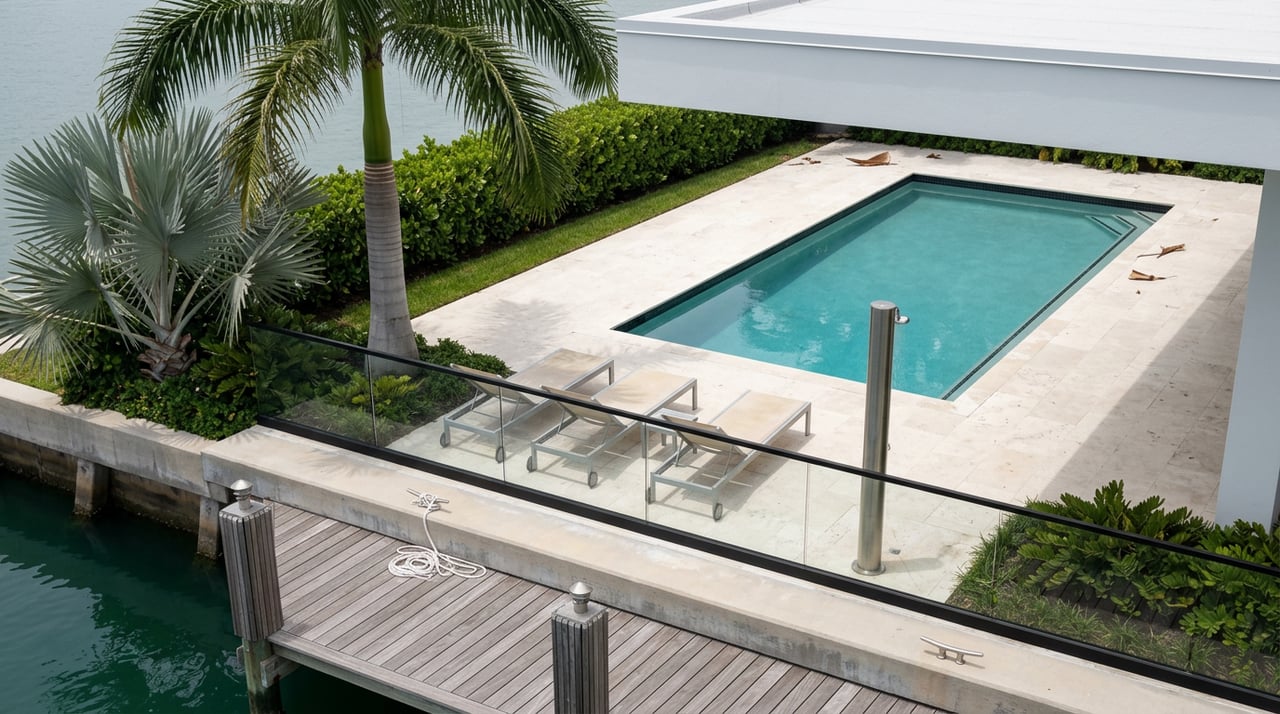
A well-designed dock package can add major convenience and value. It can also create problems if prior work was done without the proper approvals.
The City of Fort Lauderdale dock permit checklist requires building, zoning, and engineering review, along with signed and sealed surveys and site plans. The city also states that even replacing dock decking requires a permit and Broward County approval.
At the county level, Broward’s Water and Wetlands Program regulates docks, seawalls, floating vessel platforms, and other in-water structures through its Environmental Resource License process. If you are planning to expand a dock, add a lift, or create a more elaborate marine setup, this matters from day one.
The city’s seawall checklist adds another practical detail. If there is a public drainage outfall within the construction area, plans must show it, and dock piles cannot be placed directly in front of it. That type of design restriction can affect stern space, slip layout, and future improvements in ways buyers do not always expect.
If your vision includes multiple slips, start that conversation early. Broward County’s marine facility guidance says its definition has expanded to include single-family homes with five or more slips.
For a buyer considering a larger dock footprint, that could change the review path. It is much better to know that before closing than after you begin design work.
When you are serious about a Bermuda Riviera property, keep your due diligence focused on specifics. These are some of the most useful questions to ask before or during the offer stage:
This kind of checklist helps you move beyond marketing language and into practical ownership questions.
Bermuda Riviera is best understood as a smaller, gated, barrier-island neighborhood where lot-level boating details matter greatly. That makes it different from several other well-known waterfront communities in greater Fort Lauderdale.
Harbor Beach is more associated with a marina-and-club model. Harbour Inlet offers a stronger inlet and port orientation. Coral Ridge provides a broader and more mixed housing inventory. Coral Ridge Isles includes many waterfront canal homes, but with fixed-bridge limitations that can affect larger or taller vessels.
For buyers who prioritize a smaller waterfront enclave near the beach, Bermuda Riviera has a distinct appeal. But it rewards careful lot-by-lot analysis more than broad assumptions.
The best Bermuda Riviera purchase is rarely the one with the flashiest listing description. It is the one where the canal depth, boat route, seawall condition, and permit history all support the way you actually plan to use the property.
That is where experienced local guidance can save you time, reduce surprises, and help you compare opportunities more intelligently. If you are considering a Bermuda Riviera deepwater home and want a concierge-level review of both on-market and discreet opportunities, connect with Vicki Annecca for a private consultation.
Stay up to date on the latest real estate trends.
Our hallmark is providing clients with first-class personalized service and a dedication to place their ultimate satisfaction above all else. We look forward to the opportunity of representing you for all your individual real estate needs!